Good, Better, Best: Degrees of Comparison for Kids
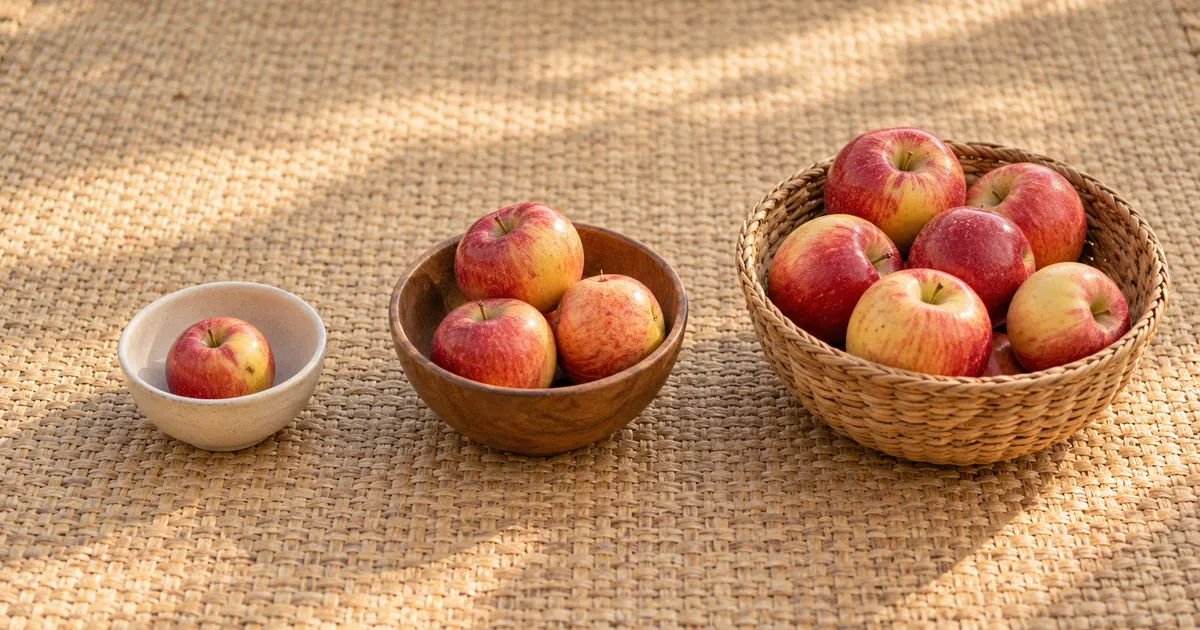
Good describes one quality; better compares two things; best selects one from three or more. Good, Better, Best: A Practical Guide to Comparatives for Kids teaches this irregular pattern through examples, corrections, and exercises. English uses better and best, never gooder or goodest.
What Children Need to Understand
These words express one quality at different degrees: a good book; a better book beside another; the best bedtime choice among three. Quality stays constant; relationships change.
Good, Better, Best: A Practical Guide to Comparatives for Kids gives children a three-step map: good describes one person, object, or experience; better compares two; best selects one group member. Number cues—one, two, or a group—guide each choice.
Give every evaluation a clear criterion. “This bag is better for swimming because it dries faster” explains the choice. Compare objects, options, or your child’s earlier work—never rank children against one another.
How Good, Better, and Best Work
Short adjectives often follow regular patterns: small, smaller, smallest or fast, faster, fastest. Good behaves irregularly: Standard English replaces the whole word instead of adding endings to create gooder or goodest.
Listeners need a reference group. “This is the best” needs context: the best route, answer in the set, or time for a task.
Good, Better, Best: A Practical Guide to Comparatives for Kids maps description, contrast, and selection. Ask: What is good? Which of two is better? Which is the best in the group?
Rules and Examples for Clear Comparisons
Name both choices with better than: “The green chair is better than the wooden chair for the garden.” Known context permits omission: “We tried both chairs. The green one is better.”
Group selection uses the best: “This is the best picture in the book.” A possessive can replace the: “This is your best picture.” Phrases such as in the class, of the three, or for this job identify the group.
Good, Better, Best: A Practical Guide to Comparatives for Kids keeps nouns and criteria visible. “This is a better coat for rain” names object and purpose, helping children hear what gets compared and why.
The adverb well uses the same forms: “The child reads well,” “The child reads better today,” and “The child reads best in a quiet room.” Linking verbs take good: “The soup tastes good” and “Your idea sounds good.”
Common Mistakes and Quick Fixes
Gooder, goodest, and more good wrongly apply regular rules. Choose better or best: “This game is better,” not “This game is more good.” Practise all three forms aloud as one set.
Never confuse than with then. Than introduces comparison: “The train is better than the bus for this trip.” Then marks time or order: “We packed our bags, then we left.” Meaning reveals the correct word.
Review Good, Better, Best: A Practical Guide to Comparatives for Kids by sorting errors by purpose: describe one thing, compare two, or select from a group. Next, check than, the, and each supporting reason.
Guided Practice for Children

Use Good, Better, Best: A Practical Guide to Comparatives for Kids across two short rounds. First, let your child answer independently; next, request each choice’s rule. Explaining choices turns memorised forms into working grammar.
Fill in the Missing Word
Choose good, better, or best.
1. This story is _____, but the second story is even _____.
2. Of these three routes, the river route is the _____.
3. My spelling is _____ than it was last week.
4. The soup tastes _____.
5. This is the _____ seat for seeing the screen.
Answers: 1. good, better; 2. best; 3. better; 4. good; 5. best.
Ask your child to identify each sentence clue. Than, of these three, and the often signal structure, but meaning decides the answer.
Build a Clearer Comparison
Join each pair of ideas in one sentence.
1. This plan is good. The other plan saves more time.
2. There are four bags. The green bag is lightest.
3. Both drawings are good. The second has clearer labels.
Possible answers: 1. The other plan is better because it saves more time. 2. The green bag is the best for carrying on this trip because it is the lightest. 3. The second drawing is better because its labels are clearer.
Accept varied answers backed by sound reasons; check grammar, fairness, and logic.
Building the Pattern into Everyday Talk
Begin with visible objects. Place two pencils on a table; ask, “Which is better for drawing a thin line?” Add a third: “Which is the best for colouring a large space?” Physical choices make contrasts concrete.
With children aged five to nine, keep exchanges brief and allow pointing before speaking. Older learners can add reasons, limits, and equality: “This route is as good as that one, but the third route is better when it rains.”
Multilingual children may already understand comparative ideas through another language. Build on this knowledge while practising the English sequence: good, better, best. Avoid word-for-word translation when languages build comparisons differently.
- Try comparing three toys with your six-year-old during five minutes of play.
- Use one familiar picture book and ask four better-or-worse questions.
- Practice good, better, and best with snacks before today’s afternoon meal.
- Invite your child to correct two playful comparative mistakes at dinner.
- Repeat each corrected sentence twice, then use it naturally in conversation.
When a word has several meanings or pronunciations, Cambridge Dictionary is a useful check before turning it into child-friendly examples.
Frequently Asked Questions
Why Does Good Change to Better Instead of Gooder?
Good is irregular, unlike patterns such as small, smaller, and smallest. Its comparative is better; its superlative is best. Teach good, better, and best as one connected set; short spoken examples strengthen recall.
Do We Always Need than After Better?
No. Use than to name the other choice: “This path is better than that path.” Omit it when context identifies both choices: “We tested both paths, and this one is better.” Context must still reveal the comparison.
Do We Always Put the Before Best?
No. Use the in “This is the best answer.” A possessive can replace it: “This is your best answer” or “That was our best plan.” Fixed expressions may omit it, including “Try your best.” Teach complete sentences, not an absolute rule.
How Can I Help a Child Who Speaks Several Languages?
Good, Better, Best: A Practical Guide to Comparatives for Kids teaches every learner identical English forms, though other languages may express degrees differently. Acknowledge each difference, then practise with objects and short sentences. Ask about meaning instead of requesting word-by-word translation.
How Much Practice Does a Child Need?
Use a few focused examples per session. Ask your child to describe one option, compare two, then select one from three. Revisit this pattern during reading, play, or planning for practice across varied sentences.
- Start with one object and describe why it is good.
- Compare two choices using better than and give a reason.
- Practice with three or more choices and select the best one.
Want to see how these ideas work in a real lesson — try a LearnLink trial lesson.
Stay updated on our latest tips and resources by following us on Instagram LearnLink.